Saturday, June 15, 2013

Beyond FACTS: FIREBIRD by Mark Doty

I recently attended a workshop at Lighthouse Writers Workshop here in Denver in which poet Mark Doty offered tips on how to “force a focus on the language.” My notes include the following gems:
-What you know and don’t say energizes your work.
-Allow your reader to experience a pressure or other outcome without knowing the reason.
-Figure out the relation of the self with what’s being observed.
-Try framing a bit of memory inside something else, as part of another whole.
-Create your own version of reality, your own subjectivity.
-Putting your best lines up front can shift a work’s emphasis and ending.
-When reaching for closure, set it aside.

Then I read Mark’s 1999 memoir, Firebird, and was struck most by its closing, which completely surprised me as he’d seemed to purposefully stretch beyond potential endings involving his parents and his difficult relationships with them. Because this story is not about them, really; it’s about the boy who survived despite them.
When I first started reading this book I was simply amazed by the gorgeous prose. Soon bizarre school and playtime scenes and outings revealed that this child was very much on his own, and eventually his struggles as a gay preteen and teen were complicated by the many obstacles his troubled family constantly provided. Glimmers of hope arrived via music and art shared and appreciated, found beauty in simple things such as Petula Clark singing “Downtown” on The Ed Sullivan Show, steps made toward a life eventually immersed in art thanks to a few gifted teachers along the way.
Thankfully Mark Doty opted to become a teacher himself and continues to share insightful lessons with his own students...and readers. In Firebird, he offers this nugget: “‘What we remember,’ wrote the poet who was my first teacher of this art, ‘can be changed. What we forget we are always.’” Which, with the opening scene of his memoir, ties back neatly with his workshop advice to “frame a bit of memory inside something else, as part of another whole.”
I also treasure this passage, in which the poet celebrates a gift given to him by his mother, who introduced him to the possibilities of art, and by subsequent teachers, some encountered directly, some from an admiring distance:
“The gift was a faith in the life of art, or, more precisely, a sense that there was a life which was not mine, but to which I was welcome to join myself. A life which was larger than any single person’s, and thus not one to be claimed, but to apprentice oneself to. In the larger, permanent community of makers, you could be someone by being no one, by disappearing into what you made. In that life your hands were turned, temporarily, to what beauty wanted, what spirit—not your spirit, not exactly—desired: to come into being, to be seen.”

Sunday, June 02, 2013

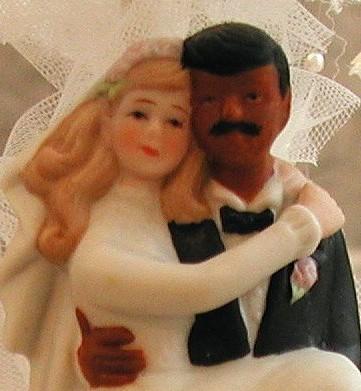
Beyond FUMING: What's Really Behind Racist Reactions to Multiracial Cheerios Ad?


I was pleasantly surprised to read in a friend’s Facebook post last Friday that a new Cheerios ad featured a biracial family. “Seems odd that this should still catch one’s attention in 2013,” my high school buddy wrote, “which is a pretty clear indicator of how far we still have to go.”

I agreed and moved on, completely oblivious to the fact that the ad was not only noticed by a lot of people, but was bombarded by so many hateful, racist comments on its YouTube page that eventually the comments section had to be shut down.

Journalist Mary C. Curtis opened her Friday Washington Post column “Backlash greets Cheerios ad with interracial family” with this line: “Here we go again, with more proof, if anyone needed it, that the post-racial American society some hoped the election of an African American president signified is far from here.”

The thing is, many Americans who are white and don’t interact with people of color probably do need this reminder that racism exists. When the first edition of my novel One Sister’s Song was published in 2002 and I visited with book clubs in primarily white suburban neighborhoods here in Denver, I was confronted by some who insisted racism was a thing of the past. One woman even went so far as to insist I must have exaggerated issues faced by contemporary people of mixed-race heritage in my book. Yes, this was ten years ago and no, my mixed-race family has never been wakened in the middle of the night to a burning cross on the front lawn, but I’m fairly certain racism does still exist. And this widely discussed episode of very public, very racist comments is only one example.

I’m intrigued, as usual, by the possible deep-down reasons behind the flare-up. What about this seemingly innocuous ad pushed the buttons of those who reacted so negatively? Is it the fact that the father in this family is black? Would the backlash have been as vitriolic if the father was white and the mother black? Is it the fact that some still consider it selfish of mixed-race couples to have children because such children are supposedly condemned to difficult lives? I addressed this once-very-common argument against mixed-race marriages (and evidence that it holds no water) in an October 2005 post “Beyond FACTS: Debunking Multiracial Myths.”

I still believe, as I wrote back then, that “challenges faced by children in mixed-race families ought to be considered opportunities for discussion and awareness rather than dreaded as difficult and unfortunate obstacles,” but years later many also still believe a child in a mixed-race family is going to face unfair disadvantages as he or she grows up.

I say anyone who grows up to spew racist comments—online and elsewhere and for whatever reason—is at a far greater disadvantage.

Wednesday, April 17, 2013

Beyond FINISHED: In an Upstate New York State of Mind

How fitting that I found myself reading an essay about upstate New York (“Let Me Tell You What It Means” by author Brock Clarke in a gem of an anthology Why We’re Here: New York Essayists on Living Upstate from Colgate University Press) while waiting in car line at my kids’ school today, a Denver day graced by what my husband and I call “Syracuse weather.” As a slate sky hung overhead and icy snow pelted everything in its path I found comfort in the images, lamentations, and wonder presented by another writer who’d experienced, and at some point longed to escape, the charms and challenges of upstate New York.

Twenty-five years after I drove off to Connecticut with all my worldly possessions packed into my 1988 Ford Escort hatchback, upstate New York remains “home” in the sense that my parents still reside in the house in which I grew up and many of my friends and siblings and their families remain in the area. And while this should makes sense, in many ways it doesn’t. It seems I’m among those who leave upstate New York only to eventually come to realize they’ll never really leave it behind.

When I met Mary Karr—author of The Liars’ Club and subsequent memoirs who now lives in Syracuse and is a professor at my alma mater, Syracuse University—at a Lighthouse Writers Workshop event last year I exclaimed I was from Syracuse and gushed that I loved my hometown. Fact is, there’s not a lot to love about Syracuse, and Mary Karr knew that. She gave me a puzzled look and said “Yes, it’s a sweet city,” but I knew she was just being polite; Syracuse has come a long way but it’s never been “sweet.” Read Syracuse native Joe Amato’s Once An Engineer and you’ll understand what I mean.

Syracuse is also primarily gray all winter long and humid and sticky and buggy in the summer. But its springs are lush and green and its falls stunning, especially when you head to nearby lakes, state parks, and small towns. I’d always known growing up in a close suburb of Syracuse that something special lay just around the corner, a feeling enhanced when my mom occasionally drove my sisters and me around town “to look at houses.” When I could drive I’d go on excursions of my own in my parent’s lumbering station wagon or a friend’s borrowed car, driving to places I’d heard of but never seen as though they were exotic ports of call, either disappointed to find them run-down or surprised when I came upon a curve of rolling, wooded hills or some other unexpected, breathtaking view.

None of that surprising beauty was familiar to me back then, and yet it belongs to me now as I say, proudly, that I’m from upstate New York. As Brock Clarke writes, “This is what it also means to be from upstate New York: to move somewhere else…and then pretend…the place you’ve left isn’t still inside you wherever you go.”

I have no doubt upstate New York lives inside me and will remain with me wherever I go. I set my first novel, One Sister’s Song, as well as some of my short stories in its environs, and images from my hometown reside in my poetry and in the backdrops of my dreams. And every spring I still pine to return to upstate New York with my kids as I do every summer to enjoy not only the region’s natural riches but a mini-reunion with my extended family, to see the smiles and hear the voices and laughter that are as familiar to me as a spring snowstorm…and never fail to remind me who I am, and where I’m from.

Wednesday, February 13, 2013

Beyond FRIENDS: CHEAP CABERNET: A FRIENDSHIP by Cathie Beck


Colorado author and journalist Cathie Beck recently met with a lunch group I organize of local women authors, editors, and other talented literary types. Her discussion involved how she promoted her self-published memoir, Cheap Cabernet: A Friendship, so effectively online—and followed that up with immediate outreach to agents and publishers—that the book quickly got the attention of a top agent and was sold to a major house.

Intrigued by Cathie’s story, I bought a signed copy of Cheap Cabernet. Usually I add new titles to my growing pile of books to read, but the glimpse I’d gotten of Cathie’s complex history and comments shared by others in the group who’d read her book prompted me to dive right in. I’m so glad I did.

Cathie insists she comes from the wrong side of the tracks in every possible sense. Her brief but highly memorable stories of her parents’ dysfunctional ways and their impact on every member of their family bring to mind the searing images of Mary Karr’s childhood memoir, The Liars’ Club. Both of these petite authors armed themselves early on with quick wit and a tendency to swear a blue streak when riled. And both write as though their survival depends on it. Considering their incredibly painful upbringings and the challenges they’ve faced through the years, that may very well be the case.

While Cheap Cabernet does indeed celebrate a unique friendship, it also illuminates singular lives in which neglect, desperation, and despair are somehow overcome by the dogged determination, unapologetic moxie, and wild laughter that can make life worth living…even (or especially) when it becomes too brutal to bear.

When Cathie meets Boulder artist and Bronx native Denise Katz, both their lives are at crossroads and the need to share their separate journeys with someone as unique and outgoing and borderline lawless as the other compel them to become fast friends. Various forms of mania ensue, from unplanned road trips and run-ins to a Jamaican vacation gone very wrong and a side trip to Cuba that almost proves disastrous. Denise’s multiple sclerosis is on such an unpredictable course that Cathie finds herself on the kind of emotional rollercoaster ride she thought—after a lifetime of poverty, abandonment, and emotional battles—she’d finally left behind.

But the physical and mental toll of an illness with debilitating symptoms that a decade ago lacked mitigating treatments eventually would take its toll. Somehow both women come to terms, in their own unique ways, with the myriad demands of their complicated lives and reconcile themselves to their individual, yet completely intertwined fates.

How Cathie Beck captured all that, and much more, in one book is nothing short of remarkable. How she fought to not only get Cheap Cabernet in print but to get it some of the attention it so deserves is another amazing story altogether.

“No one should have to face multiple sclerosis alone,” Cathie notes in an afterword that includes details, resources, and a note regarding the fact that a portion of all proceeds from sales of Cheap Cabernet go directly to the National Multiple Sclerosis Society, “including the family members and loved ones of someone who has been diagnosed with MS.” Considering Cathie’s difficult past, Denise’s cruel “treatment” when her illness led to severe depression, and Cathie’s continuing struggles with rheumatoid arthritis and related insurance and medical nightmares, Cheap Cabernet stands as a testament to the fact that no one should have to face any serious illness alone.

While Cathie knocked herself out to help a friend in need and admits she got beat up a bit along the way, she also continues to marvel that miracles do happen, that “people come into our lives, and sometimes, if we’re terribly lucky, we get the chance to love them.”

Wednesday, January 30, 2013

Beyond FACES: USA TODAY “Changing Faces” Article

At a recent birthday lunch with nine chatty sixth-grade girls I pretended not to overhear the following conversation:

“My brother does the funniest Asian accent.”

“Asian accent? Tell me what an Asian accent is.”

“Uhhh.”

“Really, what’s an Asian accent? I want to know.”

Funny thing was, both these girls were of Asian descent, though most people would say only one “looked” Asian with straight dark hair, olive skin, and dark eyes. She was the one who asked her blue-eyed, light-haired friend what an “Asian” accent was supposed to sound like. Everyone involved seemed relieved when the subject was abruptly dropped.

In another recent instance involving two other sixth-graders a tall, fair-skinned, dark-haired girl (my youngest, whose paternal grandfather was black) confronted a petite white friend who’d called someone’s comical attempt at a “country accent” a “black accent.”

“Really?” my daughter challenged with a smile. “You’re going there with the white racial girl? Really?”

While some may find such conversations awkward and unnecessary, I’m glad to hear kids this age openly challenging each other about stereotypes and the need to realize some can be hurtful…and not everyone is willing to let them slip by without comment.

According to the January 17 USA Weekend article “Changing Faces,” Americans of heritages commonly pegged in the U.S. as “minorities” are becoming increasingly more numerous. “A major transformation” is taking place in American demographics, one expert states, with the U.S. percentage of “non-whites” jumping from 31% to 37% since 2000 and even faster changes in store in the near future. “Among kids,” the article reads, the “white-only” percentage will drop to less than 50% of their U.S. population within the next six years.

I think many of our kids already understand that whether a person “looks” as though he or she comes from a certain heritage matters very little, and anyone you meet might come from a diverse family or have close friends of another race or culture. Remarks that could be considered insulting to members of a certain group could upset just about anyone, then, and are best left unsaid.

As our country’s demographics continue to undergo its current “major transformation,” I hope more Americans follow our kids’ lead and learn to not only mind what they say but to challenge those who sometimes fall back on old, potentially hurtful ways. Luckily in both these recent instances no one was hurt, and all the girls involved (and those around them, most of whom (like me) pretended not to hear what was going on but took it all in…and probably learned a thing or two) kept things calm and moved on. Let’s hope they head into their diverse futures with such important skills intact, for everyone’s sake…including those of us they inspire on a regular basis.

Wednesday, October 17, 2012

Beyond FUNDRAISING: Helping an Indie Press Publisher-Poet in Need

Journalist, videographer, novelist, essayist, poet, and illustrator Nick Belardes is a busy guy with a big heart whose work has been published to wide acclaim online (including on Twitter, where he published the first literary Twitter novel) and in print.
I met Nick at a Writing Away Retreat in Breckenridge last month. When he read at a retreat reading, I thought immediately of the early short stories of Junot Díaz and the fantastic works in the Latinos in Lotusland anthology edited by La Bloga blogger (and fiction writer and attorney) Daniel Olivas. Nick’s characters are colorful and authentic, their language infused with the complexities of his Latino heritage.

Nick’s first book of poetry, Songs of the Glue Machines, is due to be published by California-based Lummox Press in 2013. In the proud tradition of Philip Levine, Nick’s collection spotlights and honors the working class. His focus: industrial workers in Central Valley factories in California.

Nick is trying to raise funds to help Lummox Press founder and long-time poet RD Armstrong not only cover the publishing costs of Songs of the Glue Machines, but also simply make ends meet. RD struggles with health issues that have plagued him for some time.

“If enough money is raised, we will help him buy a used car,” Nick says. “And if not a car, then something as simple as paying a month’s rent. People need to understand how much RD sacrifices to publish poets like myself. I’m always trying to do something to help the literary community and can’t think of a better cause.”

Help Nick raise the remaining eighty percent of his $2,500 goal for RD and Lummox Press via his ChipIn.org page.  Every little bit helps.

¡Buena suerte, Nick!

Sunday, September 16, 2012

Beyond FRIENDS: You talking to me?

Just before the start of summer and toward summer’s end this year I experienced two incredibly memorable events: the fifth annual Mixed Roots Film & Literary Festival in Los Angeles in June and the September Writing Away Retreat in Breckenridge CO. Both took me away from home and out of my typical routine and introduced me to remarkably creative people from all walks of life. And while I’d suspected my understanding of racial issues would be expanded at the Mixed Roots Festival, I was surprised when the most challenging lesson I learned there came in the form of a question from on high—a question that would trouble me until I was finally able to answer it three months later.

I’d applied to read from my first novel, One Sister’s Song, at the Mixed Roots Festival and was thrilled when I was selected to be one of four literary presenters on the second day of the weekend. After our readings, the four of us were asked questions by Heidi Durrow, a founder of the festival and author of The Girl Who Fell from the Sky, and by members of the audience.

We were seated in the front of a high-tech theater within the Japanese American National Museum in LA’s Little Tokyo neighborhood. The lights were bright, the seats went practically straight up in front of us, and it was impossible to see audience members past the first ten rows.

From a seat high up and well beyond my vision, a woman’s voice asked me how I respond to racist comments when my husband, who is of mixed-race descent, is not present. I tried to recall if anyone had recently made a racist comment around me, perhaps without knowing that my husband was a person of color, and could not think of a single instance. I could, however, think of comments made to me years ago when my husband and I were dating, comments that had been voiced in ways that were supposed to imply concern for my well-being.

In both those instances, I’d deferred to the (older) ages and (somewhat questionable) intentions of the people speaking to me, said nothing, and moved on. So I answered the woman at the festival by saying I’m the last one to put someone on the spot for saying anything that could be considered offensive, that I choose to assume people mean no harm and opt to get to more comfortable ground as quickly as possible. My answer was lame, but honest. But since that voice from on high posed that question to me, I’ve wondered what I should say the next time someone makes a prejudiced comment of any kind (racist, homophobic, anti-immigration, anti-pick-a-religion, anti-pick-a-region, anti-special needs, the list goes on and on) to me. Perhaps even more importantly, what should I teach my kids to say when they hear such comments?

And then my friend Phyllis came back to town. Phyllis Glazer of Dallas is no push-over, having led a community of small-town Texans in a long complex fight against a nearby toxic-waste treatment facility that caused cancers, birth defects, and other tragic afflictions. When Phyllis got directly involved and took her town’s fight to the national media and to Washington, she received death threats directed not only at her but at her youngest son. Her story is fascinating and she’s attended two Writing Away Retreats this year to get feedback on her memoir manuscript. Meanwhile, she keeps teaching those of us lucky enough to spend any time with her a lesson or two on how to get things done.

While driving Phyllis and others from the Denver airport to Breckenridge on the first day of the retreat, I found myself in the middle of a discussion about racist remarks and how to cope with them. Phyllis was sitting next to me, her red hair in its everyday up-do adorned with purple flowers and feathers, her eyes bright, her make-up perfect. Phyllis, a brain cancer survivor, is a ballroom dancer and carries herself like a queen. She speaks loudly and laughs loudly and when she tells a story commands the attention of everyone in a room…especially when her story involves the first time she was shot at by someone who wanted her dead.

As for those who make racist remarks to her, Phyllis said she tells them “You’re talking to the wrong person.”

Simply put but effective enough to make an important point, and make it clear a conversation has ended. I have a feeling Phyllis has put more than one person in his (or her) place with that remark, and I plan to use it as needed in the future. Hopefully it won’t be needed often but it’s good to be prepared...and to prepare one’s children in case they need some ammunition in the fights they’re forced to face.

Thanks, Phyllis.

Friday, July 20, 2012

Beyond FICTION: THE EDUCATION OF LITTLE TREE by Asa Earl Carter


How ironic that I sought solace today by finally finishing THE EDUCATION OF LITTLE TREE by Forrest Carter. This engaging story allowed me to escape to the mountains of Tennessee at various times over the past month. I’d understood from the back cover that it was autobiographical, a fact that led me to tears earlier this week during one especially heartbreaking scene involving the main character, a boy of Cherokee heritage who lives with his aging grandparents.

Then I finished the book, decided to do a little research about the author, and immediately found this 2007 post on Turtle Talk, the blog for the Indigenous Law and Policy Center at Michigan State University College of Law: Indian Frauds: “The Education of Little Tree” and Oprah’s Book Club.

Turns out Forrest Carter was actually “Asa Earl Carter, a member of the Ku Klux Klan and speechwriter for former Alabama governor George Wallace who wrote Wallace’s infamous vow: ‘Segregation today! Segregation tomorrow! Segregation forever!’” And THE EDUCATION OF LITTLE TREE is a work of complete fiction.

I’d been duped. Still, I’m glad I read THE  EDUCATION OF LITTLE TREE before I knew these facts. This is a beautifully written book, despite now-obvious stereotypes I’d read as true depictions of characters’ attributes and actions. 

And I’m thankful I found Turtle Talk and its post on this book. The post’s comments stand as an especially helpful addendum as they debate everything from the complexities of racism to the impact of learning a writer’s intentions to whether a work should be left to stand on its own—or dismissed if it’s revealed to be other than expected. These are complicated issues. But as those of us in Colorado have learned so painfully this difficult summer, life is complicated. What’s important is that we keep talking, and listening, and learning as we strive to understand the world in which we live...even as that world reveals itself to be much more deceptive and disturbing than we want to think.

I’ll opt to take away from the Turtle Talk discussion of THE EDUCATION OF LITTLE TREE true solace from the wise words of one reader:

“I am Cherokee and I did live in the Blue Ridge Mountains at a very young age until I grew into my late teens. KKK or not, Carter did capture the importance and strong ties of family among the Cherokee. It’s how we survived. Forget and forgive. And strive for peace.”

Friday, March 23, 2012

Beyond FICTION: THE BAKER'S DAUGHTER by Sarah McCoy ...and a Call for Compassion

Serendipity came into play today, first with an early-morning bumper sticker sighting that kept the message “Compassion is the best revenge” in the forefront of my mind and again a few hours ago at a Tattered Cover Book Store signing during which author Sarah McCoy discussed her new novel, The Baker’s Daughter.

The Baker’s Daughter explores German as well as Mexican influences in the border city of El Paso, Texas, Sarah’s home while her husband is based at Fort Bliss. But it also explores themes of identity. Not only personal identity but, as Sarah put it, “macro” levels of identity that involve everything from one’s current country of residence to one’s community, neighborhood, and family.

When Sarah also said her story considers the importance of compassion for others when dramas fueled by identity issues play themselves out I immediately realized I’d come full circle within a tidy twelve hours, discovering along the way a potentially important piece to an especially difficult, disturbing puzzle.

The story of Trayvon Martin’s murder has been haunting me as I’ve struggled to understand how an innocent teenager two years younger than my son—who shared with my son current teenage affinities for hoodies and Skittles—came to be shot in the chest and killed while walking in a presumably “safe” Florida neighborhood. My search for answers over the past week has led me to read or recall the works of various contemporary black writers, many of whom regularly provide me with valuable insights into issues of race.

Writers of color have not only lived with subtle and overt forms of discrimination throughout their lives, they’ve analyzed and written volumes about their experiences and understandings, many of which differ and sometimes contradict. So in the past week I’ve returned to recently read scenes of Bernice McFadden’s Gathering of Waters, a work of historical fiction woven around the 1955 Mississippi torture and killing of another innocent black teenager, Emmett Till; read the eloquent NPR essay “The Lingering Memory of Dead Boys” by author Tayari Jones; recalled Tayari’s novel, Leaving Atlanta, about the racially motivated serial killings of black boys in the summer of 1979 as well as No Place Safe, Boulder author Kim Reid’s award-winning memoir of the same events; and read columnist Charles M. Blow’s New York Times piece, “The Curious Case of Trayvon Martin” in which Blow refers to “the burden of black boys in America and the people who love them.”

Black writers across the country continue to voice their opinions of the Trayvon case, the need for Trayvon’s apparent killer to be arrested and charged, and related events such as the Million Hoodie March in their own columns, blog posts, tweets, and Facebook comments, many stating they have a son or nephew who could be killed just as easily if he, too, were to land in the wrong place at the wrong time because he, too, is a young black man like Trayvon. Meanwhile our nation’s chief executive and writer of color, President Obama, weighed in this morning by acknowledging that if he had a son, his son would look like—and potentially be as vulnerable as—Trayvon, too.

But President Obama went a little further as he challenged us to question what needs to be fixed so killings of innocents someday become much less common in our society. And now I have an answer for him thanks to a thought-provoking bumper sticker, an inspiring visiting author, and a singular serendipitous word: compassion.

I’ve signed the online Change.org petition insisting the man who pursued Trayvon, George Zimmerman, be arrested and charged with the crime of killing Trayvon. And I’ve also seen George Zimmerman’s photo; seen him referred to as a “white Hispanic” and as “white” and as “Latino” by the press; and read that he has a history of minor scuffles and not-so-minor domestic abuse issues, that in the past eight years he’s called local police 46 times to report suspicious activity in his community, that he’s now in hiding due to death threats.

And I can’t help but wonder if George Zimmerman might be a very troubled individual in need of significant help. His recorded racist comments and record of aggressive behavior leading up to this attack plus his apparent refusal to back down and put away his damn gun when a scared, unarmed teenager trying to get to safety finally turned to him and asked “What are you following me for?” all indicate this. And I, for one, hope his arrest leads not only to justice, but to his treatment.

But I’m no psychotherapist or criminal investigator. I’m just a writer who reads a lot, tries to learn a lot, and writes to make sense of it all. And while I hope Trayvon’s parents sense the support of every compassionate person who hears about their son’s tragic, senseless death and continue to hope justice is pursued in this case, I’d like to respectfully suggest we consider the possibility a little more compassion toward everyone in our communities might go a long way to prevent similar crimes in the future. Who knows what issues others’ face on a daily basis, what demons drive and threaten to derail them? If George Zimmerman had gotten the help he obviously needed long before he became a 28-year-old apparently fueled by a bitter mix of anger and paranoia might he have driven past Trayvon walking with his head covered against the falling Florida rain on February 26 and simply hoped the poor kid would soon arrive somewhere dry?

Sarah McCoy mentioned this evening that she loves to get “under the skin” of the characters she writes as well as those she meets in the pages of others’ books. “I want to learn how it feels to be this way,” she said, “how it feels to live this experience.” I truly believe if more people strove to understand how it feels to be someone else and opened themselves up to the possibility those with different ways of being—and appearing—pose no threat to anyone or anything we could take steps toward reducing the number of homicides in this country and eventually even create a better, safer world for ourselves and those we know and love…and maybe even for those we don’t know and may not exactly adore for whatever reason. If compassion is the best revenge, would the latter development be such an awful thing to allow?

In the same way organized religions around the world teach some form of the Golden Rule, Americans—whether religious or not—should be encouraged to take the guideline to treat others as you’d like to be treated to heart and act upon it on a regular basis. Make it a habit, even. Is it possible the key to fixing the problem of heartless, thoughtless killings of innocents could be so simple? Let’s start with having more compassion for our neighbors—including teens dressed any way they like and maybe even tragically troubled adults—and see where we go from there. It certainly wouldn’t hurt.

Tuesday, January 24, 2012

Beyond FACTS: EVEN TOUGH GIRLS WEAR TUTUS by Deborah Jiang Stein

Deborah Jiang Stein is a rock star. Just read her new memoir, EVEN TOUGH GIRLS WEAR TUTUS, and check out her non-profit, The unPrison Project, and you’ll understand what I mean. Born heroin-addicted to an incarcerated mother in the Alderson Federal Prison for Women in West Virginia, Deborah spent her first year of life behind bars. Literally. She shared her mother’s prison cell, even going to “the hole” when her mother was put in solitary confinement.
After a stint in foster care, Deborah was eventually adopted by a Jewish couple in one of the few mixed-race, cross-cultural adoptions that probably occurred in 1960s Seattle. And though Deborah’s adoptive mother was a pioneer in this respect, she was also ill-equipped to help her daughter face growing concerns about her identity, especially after Deborah, at age 12, discovered she’d been born in prison.
“I belong in the…magazines with photographs of people from tropical countries and other continents more than in my white family. The map at school gives me a place where I can imagine myself, even though I can’t say in what country or with what race I might belong, whether with Thai children with my same wide smile and lips or dark-complexion boys from Samoa whose skin color resembles mine. My nose is like those of people from the Philippines. Babies wrapped on their mothers’ backs in China wear my eyebrows. I see my own feet in the photos of South American girls, their bare feet brown like mine.
“Whenever I ask my mother about my caramel-colored skin and button nose, about the hint of almond shape to my eyes, all different from my family, she just says, ‘I love you, Pet,’ her solution to everything, always.
“In truth, there was no love big enough to cover the stigma and shame I felt about my prison roots.”
Deborah struggled with much more than identity issues growing up, and by the time she was a young adult drug use and smuggling had become not only addictions but very likely pathways to her own incarceration. Her story of survival will amaze you.
But also will her determination to do more than simply cope with her prison birth and drug addictions. Through her unique non-profit, The unPrison Project, Deborah travels to women’s prisons across the country to share her story and inspire the women she visits—many of whom are parents in prison because of drugs—to strive to overcome the past not only for their own sakes, but for their children.
I received my copy of EVEN TOUGH GIRLS WEAR TUTUS just as I finished Mary Karr’s third memoir, LIT. Another story of redemption despite one’s incredibly troubled past, LIT chronicles Mary Karr’s battle to overcome alcoholism while she also comes to terms with her relationship with her extremely complex mother. Deborah’s struggle to reconcile her loyalty to her prison-born mother with her difficult relationship with her adoptive mother weaves throughout the greater story of her “white-knuckled” rides to overcome drug addiction. Both writers draw strength from their ties to their original parents but also struggle to free themselves to live their own lives clean of their mothers’ destructive tendencies. The ways Deborah and Mary both reach beyond merely overcoming obstacles that would destroy most people to reaching out to others, bettering their own futures in the process, show the strength inherent in the human spirit, offering hope to those who need it most.

Tuesday, November 01, 2011

Beyond FICTION: THE LITTLE BRIDE by Anna Solomon

Author Anna Solomon says she was surprised to learn her first work of historical fiction, THE LITTLE BRIDE, would be marketed to women readers and Jewish readers as well as to fans of historical fiction. I was surprised to realize her book’s focus on Jewish pioneer women who came to live and toil in the American West—many as mail-order brides—introduced me to yet another dimension of the discrimination and dogged determination to survive so many Americans have endured during our country’s relatively short history.

In a recent talk and book signing at the Boulder Jewish Community Center, Anna said one of the reasons she was drawn to the topic of Jewish pioneers was the connection she felt to what she imagined they must have endured. A native of Gloucester, MA, a fishing community comprised “mainly of Irish and Italian Catholics” with a very small Jewish community, Anna says she was one of only two Jewish students in her school and was very self-conscious about the holidays she was missing and her curly hair.

Though she felt “connected to the landscape” via her familiarity with fishing, hunting for mussels in her small motorboat, sailing, and skiing while growing up, she later realized she had a “second-generation complex” as she “wanted to feel something innately New England,” something she “would never achieve as a Jew.”

“Pioneer Jews were farmers where there were few other Jews,” she explains, adding that when she began to learn about them she understood “they’d experienced an exaggerated version of what I’ve gone through” living as a Jew in New England.

Stories Untold

Anna confesses she first learned about Jewish pioneers in the U.S. when she Googled her name (before Google Alerts made this unnecessary, she jokes) and discovered a website called Stories Untold. The site features Jewish pioneer women, one of whom was named, serendipitously enough, Anna Solomon. That discovery led Anna to learn about mail-order brides, especially one named Rachel Calof, also featured prominently on the Stories Untold website. Rachel not only was a mail-order bride, but she wrote a memoir about her time as one living in North Dakota in the 1890s.

Her memoir, discovered by her daughter in the 1980s and translated from Yiddish in the 1990s, was published as RACHEL CALOF’S STORY by Indiana University Press in 2009. This year, the same year in which THE LITTLE BRIDE was published, a one-woman play called RACHEL CALOF: A MEMOIR WITH MUSIC was produced in New York.

History + Fiction = Historical Fiction

Anna notes a wide range of opinions exist on how historical fiction ought to be written, on how much of a historical novel should be made up versus how much its author should stick with historical details. Anna’s own concerns about misrepresenting historical details led her to consult not only online and printed resources but professionals on everything from antique farm equipment to the type of grass settlers in South Dakota might have struggled to keep from taking over their land. “I am concerned with getting details right,” she says.

Another special challenge inherent in writing about Jewish pioneers from the late nineteenth century involved translations from Yiddish. “Many words in Yiddish have multiple definitions or spellings,” Anna explains, adding that ultimately it’s impossible to make everyone happy on that front. Finding documented evidence about mail-order brides was also challenging as so many of the transactions were not publicized. Citing the resemblance of the practice to the Jewish matchmaking tradition, Anna says the process was not as scandalous back then as current readers might think. Still, much of it was conducted via word of mouth and scams that cost many men their money—and led many women into slavery as prostitutes—were widespread.

Any such lack of documented details didn’t deter Anna, who says a historical fiction author “fills in the gap between what is known and what is lived.” The first scene of THE LITTLE BRIDE deals with “The Look,” a humiliating examination Rachel Calof mentioned almost as an aside since it was a common aspect of becoming a mail-order bride. Anna placed her main character, Minna, in a scene that involved such an exam, adding the emotion she imagined countless women like Rachel must have experienced at such low points in their lives.

From there, Anna continued to weave the story of her main character, Minna, an Eastern European teen in the 1880s when she was orphaned and sent to Odessa to work. Minna eventually applies to be a mail-order bride in order to escape escalating violence against Jews in the region. She’s grown up with dueling myths about her mother’s absence, myths that have greatly impacted her childhood. These myths continue to impact her development as a woman and eventual wife and mother when she lands in South Dakota, far from the coastal city she’d imagined she’d live in when she was sent to the U.S. Her husband, a much older Orthodox Jew who’s still learning how to farm with his two sons, is not exactly what she’d expected, either.

The Eternal People

Am Olam, Yiddish for Eternal People, was a name assigned to a theory of sorts among some late nineteenth-century Jewish leaders that asserted discrimination of Jews would lessen if more Jews pursued “productive” lines of work such as farming. Such an effort would result in Jews who were more robust and self-sufficient flourishing on farms far from overcrowded settlements. Am Olam advocates considered The New World a sort of Eden with its promise of free land due to the Homestead Act, and were anxious to try out their experiment there.

Wealthy established Jews in the U.S., many of whom hailed from Germany, had practical reasons to support such efforts. They did much to help newly immigrated Jews from Eastern Europe, whom they considered a blight of sorts on the upscale public image they’d labored for years to establish. A very likeable character, Jacob, states in THE LITTLE BRIDE that the “rich old Jews” who’d helped immigrant families like his at first were very kind, until thousands of immigrants arrived in need of help…and education. Of special concern was how to teach the immigrants to “dress properly, clip their beards to a hygienic length, and walk without their feet flopping and their heads in the sky, and talk without their hands flailing, and tell their women to stop looking, every one, like a widow.”

Some were sent to colonies in places as far-fetched as the Dakotas, the Pacific Northwest, or the wilds of Louisiana, though most did not have the skills they needed to select ideal farm land, or to farm it. So Am Olam proved to be a relatively short-lived experiment, but it did have a widespread impact on the cities that eventually grew in these regions. As Anna puts it, the Jews who’d been sent to these areas and whose descendants stayed brought to these eventual cities a new perspective due to their direct ties to the land. Ultimately, they “challenged beliefs about what Jewish Americans can be.”

Questions of Faith and Identity

THE LITTLE BRIDE also explores the challenges faced by Jewish pioneers whose livelihood might have contradicted the demands of their Orthodox faith, or whose obligations to that faith was challenged by a spouse who held different beliefs. The question of whether Jews in the United States consider themselves Jewish Americans or American Jews continues to be a factor in “how we identify ourselves and live out this identity in a culture that isn’t largely Jewish,” Anna states.

For a young mail-order bride, such issues were jumbled into a heap of questions about identity as she struggled to overcome often brutal conditions, to be a pioneer and wife and mother despite significant language and cultural barriers, to come to terms with the fact she would never see her home again. To become a whole new person and not only survive, but prosper while she was at it.

These are just some of the challenges faced by Minna in THE LITTLE BRIDE. Anna Solomon’s storytelling skills and obvious love for her subject matter bring these challenges—and Minna—to life among a backdrop of fascinating, and widely unknown, details from American history. Mazel Tov on a beautiful book, Anna!